Nobody walks into a finished home theater and admires the conduit. People notice the screen, the seats, the way sound seems to arrive from every corner of the room at once. The conduit was settled months earlier, along with the dedicated circuits and the blocking behind the drywall for a projector mount, at a table covered in plan sheets, by people trying to predict what that room would need for the next twenty years.
That prediction is the hard part. It’s also why luxury home builders in Orlando who take home technology seriously keep showing up at the industry events where it gets argued over.
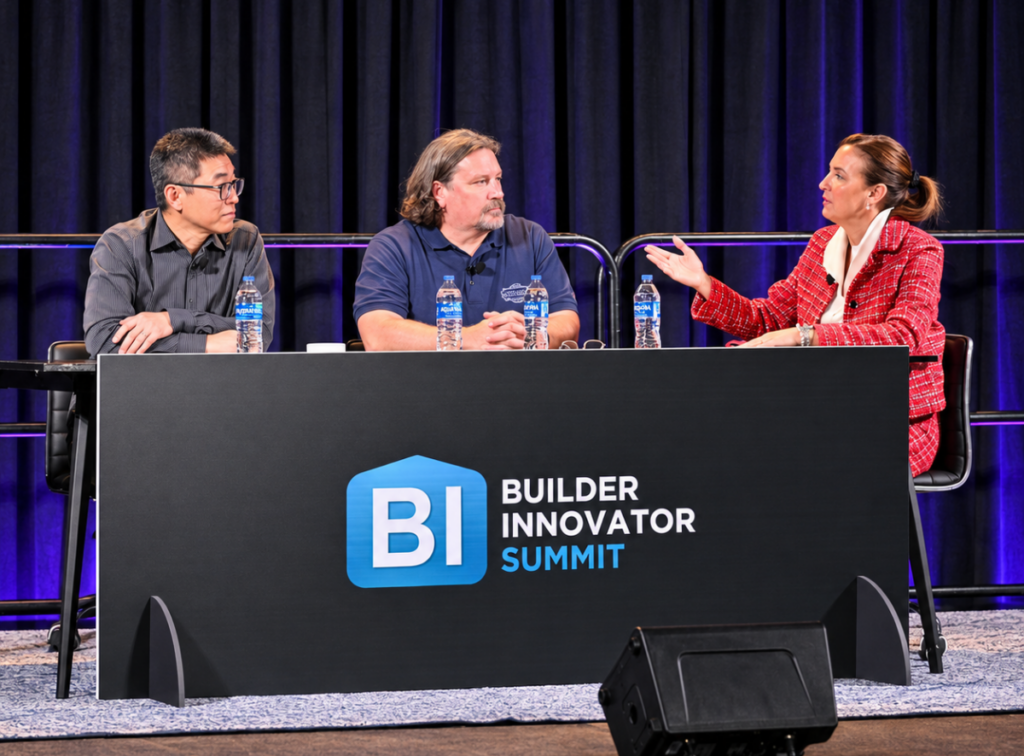
This week, October 26 through 28, the Hardwick General Contracting team is in Dallas for the fall Builder Innovator Summit. The event grew out of two earlier gatherings, the TecHome Builder Summit and the Housing Transformation Summit, and it still carries both missions. One is helping builders expand the technology they put in homes. The other is helping them get better at everything around it, from design and sales to the way a house is produced and supported long after move-in.
A Regular Stop on the Calendar
For the Hardwick team, the summit isn’t a novelty. When the event came to Orlando in 2025, Greg Hardwick took the stage on two builder panels to talk about innovation, efficiency, and craftsmanship in the custom home market. That fall, the team spent three days at the Dallas edition and came home with a long list of ideas to test against real projects.
The format explains part of the appeal. Builders attend as hosted guests, and the days mix general sessions with scheduled meetings between builders and the companies whose products end up in walls, ceilings, and equipment rooms. A builder can sit through a session on home automation in the morning and press the people who make those systems on the details that afternoon.
Guests choose among content tracks, and one of them is built for luxury custom builders serving high-end clients. According to the organizers, that track focuses on widening a builder’s sense of what’s possible in high-end home technology, how to present those options to clients, and how to design for them early in the process.
That last phrase is where most of the value sits for a Central Florida homeowner.
The Wiring Gets Decided Long Before Anyone Uses It
Here’s the thing about technology in a custom home. Most of what a homeowner touches day to day (the keypads, the speakers, the smart locks, the app on the phone) can be replaced in an afternoon, and probably will be, more than once. The infrastructure behind those devices is a different story. Cable runs, conduit to the attic, power at the windows for motorized shades, framed pockets so the shades disappear into the ceiling, a network rack with somewhere to vent its heat: those get decided while the house is still sketched on paper.
Central Florida raises the stakes on a few of them. An equipment closet tucked into an unconditioned garage will spend August somewhere north of ninety degrees with humidity to match, and electronics don’t age well in that. Outdoor living spaces, which get used here nearly year-round, need wet-rated outlets, weather-rated displays, and lighting controls that hold up through a summer of afternoon thunderstorms. Then there’s hurricane season. A whole-home generator, an automatic transfer switch, and a network that keeps running when the grid doesn’t all touch the electrical design and the site plan, and rooftop solar arrays have to meet the wind-load provisions in the Florida Building Code. This is why attention to detail is so important.
Entertainers Dream Started as a Production Home
The Entertainers Dream renovation is a good case study in how much planning a technology-heavy house asks for. It began as a typical production home. Hardwick turned it into a six-bedroom, five-bath house with two large primary suites, a movie theater, a video game room, and a table game area built around a bar that would hold its own in a neighborhood pub. The design leans modern industrial with a few steampunk touches, which is a conversation for another day.
Every one of those rooms depends on something hidden. A theater needs dedicated power and speaker wire run before the drywall goes up, plus an equipment location that won’t cook. Gaming eats network capacity in a way most bedrooms never will. Out past the glass, the outdoor living areas need power and controls of their own. And home automation, which the project lists among the house’s defining features, is only as reliable as the wiring underneath it.
Production builders tend to treat technology as an options sheet: a smart thermostat, a video doorbell, maybe a prewire package for a TV above the fireplace. For a lot of homes, that’s enough. For a house meant to host a crowd every weekend, the technology has to be part of the floor plan from the first conversation, which is exactly the kind of thinking the summit’s luxury track is built around.
Lake Sheen and the Systems Nobody Sees
On the Butler Chain of Lakes in the Dr. Phillips area, the Lake Sheen Showcase took First Place for Custom Homes at the Parade of Homes Orlando. It sits on a 4.5-acre site with 7,461 square feet of enclosed living space, and an elevator connects a basement to the two living levels above it. Basements are rare in Central Florida for good reason. High water tables turn a below-grade room into a serious engineering problem, the kind that suits a builder led by a Professional Engineer.
The house also carries extensive home automation and advanced energy-efficiency components, and that pairing lines up with another of the summit’s tracks, the one devoted to structures and systems. That track covers the features living between and below the walls, including energy and water efficiency, health and wellness, resilience, and integration.
Integration is the word to hold onto. A house can have good insulation, an efficient HVAC system, a solar array, and a smart thermostat and still underperform if nobody planned them to work together. Hardwick’s membership in the Florida Green Building Coalition comes from the same instinct, treating the house as one system instead of a collection of upgrades.
What the Team Brought Home Last Year
A year ago in Dallas, a handful of ideas kept surfacing. Smart home technology is getting noticeably smarter, from AI-driven project software on the builder’s side to home systems that can detect a heartbeat. There was plenty of talk about selling the experience of living in a home rather than a list of square footage and finishes. And a running thread connected better process with the right technology, with the payoff being a smoother planning phase for clients and builders alike.
The generational point may be the one with the longest tail. What a retired executive building on a lake in Windermere considers luxury may share very little with what a physician in her early forties wants from a house near Winter Park, even at the same budget. A theater with tiered seating and a wine room might top one list, while the other gets built around a home office with good acoustics, a gym that syncs with a fitness app, and a network that never drops a video call. Builders are still working out what that shift means for how a house should be designed, and the answers probably won’t settle into one checklist anytime soon.
Whether this year’s sessions move that conversation forward is something the team will know by the end of the week.
By the time a homeowner settles into a finished media room, nobody remembers the meeting where the conduit got drawn onto the plans. That meeting is where a week in Dallas pays off, in small decisions made earlier and with better information, inside a house that has to work for the next thirty years.
If you’re looking for luxury home builders in Orlando, keep Hardwick General Contracting in mind. Their team has been serving Central Florida homeowners with sustainable, high-performance custom homes for more than two decades. Known for a personalized approach and a commitment to quality craftsmanship, they treat every project like it’s their own family’s home. Learn more at https://hardwickgc.com/.