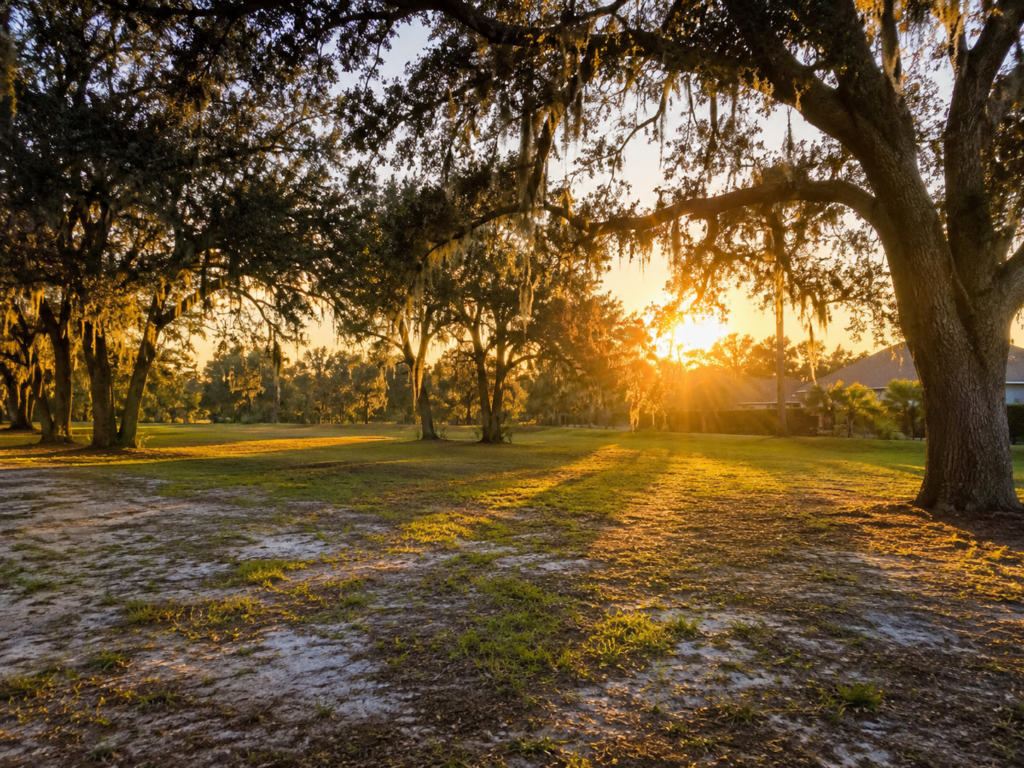
You found the lot. Oaks across the back, water showing through the trees. The kind of street that feels right the first time you drive down it. You want to write the offer before somebody else does.
Give it a day.
Almost every other call on a custom home can be undone, but the lot can’t. It drives your budget more than the house will, and it locks in things about the floor plan and design that you won’t even notice until you’re deep into it.
Ask a new home builder in Orlando, Florida what goes wrong most often and it’s rarely the house. It’s the dirt the house is sitting on. The pretty lots hide the pricey problems, and none of it turns up in a listing photo.
Start with the ground
Two lots on the same street can sit on completely different ground, and you’d never know it by walking them. One’s clean sand that a footing loves. Dig into the one next door and you may hit a layer of organic muck that won’t hold weight, the kind that has to be excavated and swapped for engineered fill before you can build a thing on top of it. That is not a small line item.
A soil test tells you which lot you’ve got. A geotech drills a few borings, maybe a few hundred bucks, maybe a thousand, and hands back a report on what’s down there and how deep. Most buyers skip it. The lot looks fine, the test feels like a box to tick,
and then the excavator finds the muck the hard way and the bill nobody planned for lands in your lap.
Hardwick General Contracting has been building on ground like this for close to twenty years. Waterfront lots where the dirt is more soup than soil. Greg Hardwick came up as an engineer before he became a builder, and an engineer’s read on a rough parcel is the thing you want on the site walk, well before you’ve closed on it.
Drainage is a cousin of the soil problem. Central Florida is flat. Water doesn’t run off a lot so much as settle onto it and wait around, so if you can, walk a parcel after a hard afternoon storm and see where it goes. If the county wants a retention pond, that comes out of the middle of your buildable space. A lot that floods every July can be fixed, with fill, regrading, and a French drain. It just costs money, and that number sits a lot easier before you’ve signed for the land. Then pull the flood map. Go to the FEMA Flood Map Service Center, type in the address, and do it before you fall for the place. Land in a high-risk zone, the A or AE ones, and you’re looking at a raised foundation plus flood insurance the bank will make you carry for the life of the mortgage. You’ll want an elevation certificate and a builder who knows how high the finished floor must be. That doesn’t kill the lot. Plenty of good homes sit in flood zones. You just want the number in hand before you write the offer, because finding it out the week the construction loan closes makes for a rough afternoon.
The lines you can’t see
A lot is bigger on the plat than it is in practice. There’s the property line, and then there’s the smaller shape inside it where the county lets you build. Setbacks eat the edges. An easement can run a utility line straight through the guts of the parcel, and you can’t put a house over an easement, ever. Add a wetland buffer and the ground you’re allowed to build on can shrink to a sliver of what you paid for. Zoning matters too, in the dull way that ends deals: a parcel capped at one house per five acres, or zoned for something you never had in mind, and you’re finished before you begin.
Get a current survey. The cheapest way there is to learn whether that half-acre is a half-acre of house, or a fraction of one.
Inside the gated communities there’s a second rulebook on top of the county’s. An architectural review board, design guidelines, a floor on square footage, a list of approved materials, opinions about your roof pitch and how far the house has to sit off the water. Some of the best land around Orlando is behind those gates. Bella Collina, for one, where Hardwick is a featured builder. The rules exist to keep the house next door from dragging down your value, which is valuable. They also mean your plan has to clear a committee before it ever reaches the county.
The oaks will have opinions
Those oaks you loved on the drive-up are probably protected. A lot of Central Florida towns won’t let you cut a specimen tree over a certain size without a permit and a mitigation fee that will make your eyes water. That’s fine, though. A canopy like that took fifty years to get that big, and you can’t buy it back. A protected oak sitting right where you wanted the garage is going to move the house, or bend the driveway around it, and you’d rather design around it on purpose than find it out after you’ve drawn the floor plan on top of its roots. Sometimes the oak wins. The houses that give in to it tend to come out better for it anyway.
How far away are the pipes
People figure the utilities are just there. In an older Orlando neighborhood, mostly they are, water and sewer waiting at the street for you to tap. Get out toward the county lines, Lake or Osceola, and you might be drilling a well and putting in septic, which means a perc test to prove the ground will even take a drain field and enough room to keep that field clear of the well. Power is the sneaky one. If the closest transformer is a few hundred feet off, running service to the house is your responsibility, and it isn’t cheap. Even on a serviced lot, tap and impact fees can run into the thousands. No single one of these sinks a deal. Stack them up, though, and you’ve got a pile of four-figure surprises, and the time to add them is while you can still have the choice.
Don’t buy it alone
Enlist someone who builds for a living to review the lot while you’re still deciding, before your name lands on the deed. They read a parcel the way you can’t. Which way the water runs when it rains, whether that soil report is a shrug or a red flag. The things the review board will balk at, and where the house wants to sit, which is never quite where you pictured it first. An hour of somebody’s time, maybe. Set against a mistake you can’t undo once the foundation is built.
Any builder worth hiring says yes to this. They would rather help you buy a good lot than get handed a bad one three months into the job.
If you’re eyeing a lot around Orlando, contact Hardwick General Contracting to walk it before you commit. We’re a family firm, building close to twenty years across Central Florida, run by an engineer who has seen firsthand what the wrong piece of ground can cost. We would rather catch the trouble on a site visit than on a change order later.